
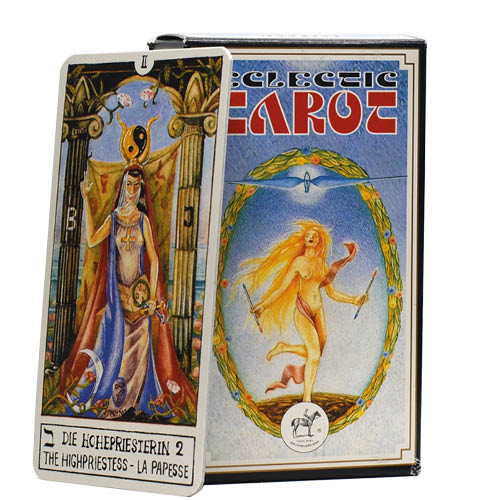
Eclectic Tarot
€ 20,50

€ 24,95
A Victorian-style tarot deck with soft pastel tones and floral motifs. The illustrations draw on the Arts and Crafts movement and the art of Walter Crane. Calm and decorative.
For quiet readings and daily pulls.
Only 4 left in stock
Some tarot cards want to make an impact. These want to be beautiful. The Harmonious Tarot is designed in the style of the Victorian Arts and Crafts movement, with soft colours, ornate floral borders and an atmosphere that recalls illustrated stories from the nineteenth century.
The deck is a collaboration between illustrator Walter Crane, one of the best-known designers of the Victorian era, and Ernest Fitzpatrick. Crane is known for his decorative prints and his attention to symbolism. You see that in every card: detailed compositions, rich imagery, little empty space.
The illustrations use pastel colours: soft pink, mint green, pale blue, warm yellow. Nearly every card has a decorative border with flowers, tendrils or leaves. The figures are elegantly drawn, in classical robes, often with a dreamy gaze or calm posture.
The symbolism follows the Rider-Waite structure, but the execution is different. Where Rider-Waite is clear and direct, the Harmonious Tarot opts for mood and refinement. That makes it more pleasant to look at, but sometimes a little less sharp to read.
The cards are printed borderless on sturdy cardstock with a light gloss. The size is 66 x 120 mm, standard tarot dimensions. They shuffle smoothly and feel solid.
This deck draws people who value aesthetics. If you appreciate classical art, Victorian illustration or a gentle visual tone, this deck will suit you. It is also popular with those who use tarot for meditation, self-care or quiet daily draws.
The calm quality makes it accessible for beginners. The guidebook is multilingual and provides basic information for each card. There are no keywords printed on the cards themselves, so you work with the image and the text from the booklet.
Pull a card after you wake and place it on your bedside table. The soft colours and detail invite you to pause before the day begins.
Walter Crane was a British illustrator and designer, active in the second half of the nineteenth century. He created picture books, wall decorations and illustrations for fairy tales. His work is considered part of the Arts and Crafts movement, which aimed for craft quality and natural forms.
Ernest Fitzpatrick translated Crane's visual language into tarot. The result is a deck that looks like an art book, not a functional working deck.
What language are the cards in?
The cards themselves contain only imagery, no text. The guidebook is multilingual and includes English, French, German, Italian and Spanish.
How does this deck relate to the classic Rider-Waite?
The structure and symbolism are based on Rider-Waite, but the imagery is softer and more decorative. Where Rider-Waite is functional, the Harmonious Tarot chooses aesthetics and mood.
| Auteur | Walter Crane |
| ISBN | 9788883954511 |
| Uitgeverij | |
| Taal | |
| SKU | 0471-LS41 |
Since 1999, Tarot.nl has been the trusted source for the largest collection of cards in the Benelux. As a Dutch family business, we personally select every deck based on quality and character.
Wondermooie kaarten, maar de verpakking is van mindere kwaliteit. Die zal snel versleten zijn na veelvuldig gebruik.
- Anoniem
Het deck is werkelijk prachtig (prachtige afbeeldingen, goede kwaliteit van kaarten), maar de verpakking vind ik minderwaardig voor een tarotset dat je vaak wil gebruiken: het deck zit in een zeer dun kartonnen omhulsel als ware het een gewoon kaartspel dat zeer snel zal verslijten, terwijl kleine stukjes van de afbeeldingen op die verpakking al bij een eerste contact loskwamen. Ik had liever gehad dat Lo Scarabeo méér zou vragen voor dit set en een degelijke verpakking voorzag, dan een goedkopere prijs met slechte verpakking.
- Anoniem

Faunabelle Tarot is the first tarot deck built specifically for children, though its warm imagery and accessible meanings also work well for adults who want a gentler approach to reading. The 22 Major Arcana are illustrated as animal ambassadors, while the Minor Arcana follows a dog, a goldfish, a cockatiel and a tortoise through stories of joy, love, mindfulness and values. Nicola Allan and Juanita Benedicto created this deck together in San Miguel de Allende, Mexico.
The guidebook covers both upright and reversed meanings in language that children from age 3 and beginners can follow without difficulty.
Dive into the world of Tarot.nl by subscribing to our engaging newsletter.
This site uses tracking technologies. You may opt in or opt out of the use of these technologies.