Les cartes de l'enfant intérieur - tarot with fairy tales instead of medieval symbolism
Most tarot decks draw from medieval symbolism, alchemy or classic esoteric traditions. This deck chooses a different entry point: universal fairy tales. Cinderella becomes The Star. Snow White stands for The Lovers. Peter Pan tells The Fool.
Isha and Mark Lerner developed this system in the nineties from their work in inner child therapy. The 78 cards follow the structure of classic tarot, but replace the iconography with stories most people already know from their childhood.
What you see on the cards
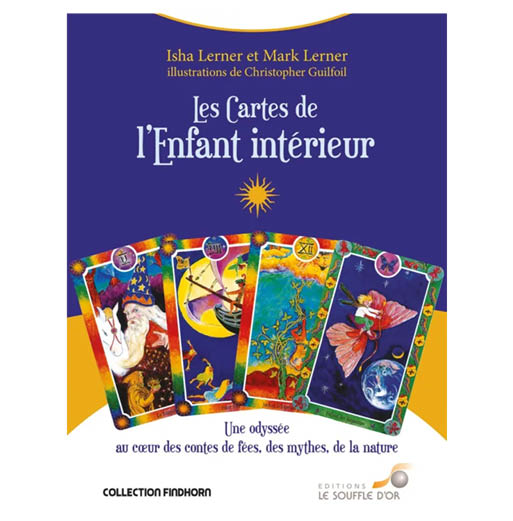
Christopher Guilfoil illustrated the deck with soft contours and a colour palette that points more toward dream than daylight. Lots of pink, purple, gold and soft blue. The style is not realistic, but also not flat, somewhere between fantasy illustration and children's book design.
Each character stands in a scene you recognise from the original fairy tale. The link to the tarot meaning is not always immediately visible. The guidebook explains how Guilfoil translated the story into the archetypal charge of the card.
The cards are large, which suits the detailed imagery. The cardstock is sturdy, the finish glossy.
How the system works
The Lerners use the fairy tales as an entry point for emotional work. Each story contains patterns you recognise from your own life: rejection, transformation, loss, hope, liberation. By reading the story instead of interpreting an abstract symbol, recognition often happens faster.
The guidebook describes for each card the fairy tale, the astrological link and the psychological meaning. It also contains spreads designed specifically for inner child work.
This is not a lighthearted deck. The fairy tales are told playfully, but the themes are heavy: betrayal, abandonment, misrecognition, loneliness. That makes the deck suitable for therapeutic use.
Draw a card, read the fairy tale aloud and notice which character touches you. That is often the figure that tells you something about your current situation.
Who this works for
This deck is designed for people who want to work with their inner child, or for therapists and coaches who work with stories instead of direct confrontation. The fairy tales provide a certain distance, which can feel safe when a subject is sensitive.
Those who do not speak French can use the cards visually, but will miss the extensive story explanation in the guidebook. The fairy tales themselves are often familiar, but the Lerners give them their own twist.
About Isha and Mark Lerner
Isha and Mark Lerner worked in the eighties at the Findhorn Foundation in Scotland, a spiritual community focused on ecology and inner work. They are both astrologers and have written several books on symbolism and personal development.
Christopher Guilfoil, who illustrated the cards, worked previously on other esoteric projects and brings to this deck a style recognisable from the New Age movement of the nineties.
Specifications
- Number of cards: 78 (22 Major Arcana, 56 Minor Arcana)
- Language: French (cards and guidebook)
- Package dimensions: 16.3 x 4.5 x 22.4 cm
- Card size: large
- Finish: glossy cardstock
- Publisher: Le Souffle d'Or
- Guidebook: extensive book with fairy tale explanations, meanings and spreads
- Creators: Isha and Mark Lerner
- Illustrator: Christopher Guilfoil
Questions we often get
How does this deck differ from a Rider-Waite tarot?
The structure is the same: 78 cards, Major and Minor Arcana. But where Rider-Waite uses medieval symbolism, this deck translates everything into fairy tales. That makes it softer, more accessible for emotional work, and less suitable for classic tarot readers who hold on to traditional symbolism.
Can I use this deck without speaking French?
You can read the cards visually and the fairy tales are often recognisable, but the guidebook is entirely in French and contains extensive explanation you would otherwise miss. A basic knowledge of French helps to truly understand the system.