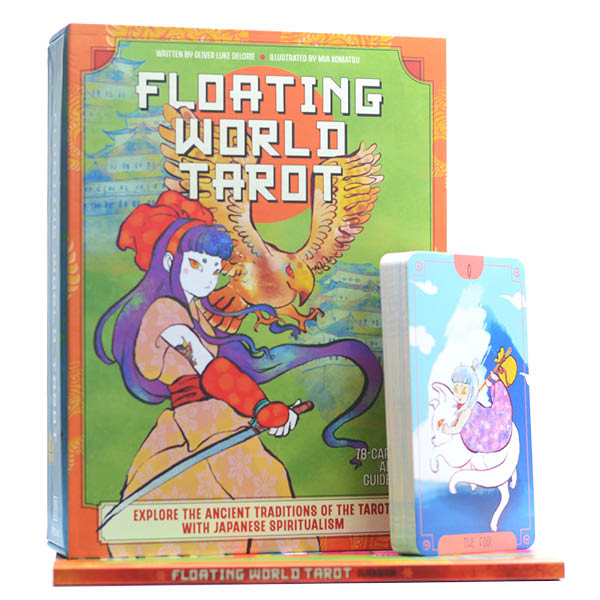
Floating World Tarot - manga aesthetics with Japanese philosophy
Not every tarot deck chooses traditional European imagery. This one draws its inspiration from the Edo period and translates the classic tarot structure into a Japanese context. The result is a set of cards that shows the Rider-Waite archetypes through the lens of manga and Ukiyo philosophy.
Ukiyo literally means 'the floating world' and refers to the transient nature of all things. That idea runs through the entire deck. The cards are not static, but feel more like snapshots in a larger story.
What you see on the cards
Mia Komatsu draws in a style you might describe as modern manga with a classical undertone. The lines are careful, the compositions calm, the characters expressive without excessive drama. Colors are saturated but not harsh.
The Major Arcana follow the familiar sequence, but receive Japanese titles and imagery. The Court Cards are translated into roles and figures from Edo culture. All 78 cards are fully illustrated, including the Minor Arcana.
The format is generous: 165 x 209 mm. That makes the cards too large for small hands, but gives space to the details in the illustrations. The finish is glossy, the cardstock sturdy enough for regular use.
How the guidebook works
The guidebook runs 80 pages and offers a brief explanation per card, keywords and interpretations for upright and reversed positions. The text explains the connection between tarot and Japanese spirituality, with references to both Shinto and Buddhism.
There are no spreads included, but there are suggestions on how to use the deck for reflection and mindfulness. The focus is on introspection, not prediction.
Draw one card per day and read the description in the guidebook. The Japanese symbolism sometimes takes a moment to settle in, but offers a different angle than you might be used to from a classic RWS deck.
Who this deck works for
This deck is built on the Rider-Waite structure, which means you will recognize the basic principles if you already know them. At the same time it adds a new layer through the Japanese context. That makes it accessible for those with some tarot experience, but perhaps less suitable as a first deck.
The manga style attracts a specific audience. Those who appreciate Japanese art, anime or philosophy will feel more at home here than someone looking for classical Renaissance aesthetics.
About Oliver Luke Delorie and Mia Komatsu
Oliver Luke Delorie previously wrote books on Eastern philosophy, including titles on wabi-sabi and shinrin-yoku. For this deck he worked with illustrator Mia Komatsu, who created the visual translation from tarot to manga.
Komatsu combines traditional Japanese art elements with a contemporary drawing style. Her work for this deck balances between familiarity and renewal.
Specifications
- Number of cards: 78
- Card size: 165 x 209 mm
- Guidebook: 80 pages
- Language: English
- ISBN: 9780760385814
- Packaging: Sturdy collector's box
- Finish: Glossy cardstock
- Author: Oliver Luke Delorie
- Illustrator: Mia Komatsu
Questions we often get
Does this deck follow the Rider-Waite structure?
Yes. The sequence and basic archetypes correspond with the classic Rider-Waite system, but the imagery and symbolism are Japanese. All 78 cards are fully illustrated.
Is this a good deck for beginners?
That depends on your background. If you already have some basic knowledge of tarot, you can work well with this. If this is your very first deck and you have no affinity with Japanese culture, a classic RWS deck might be more accessible.