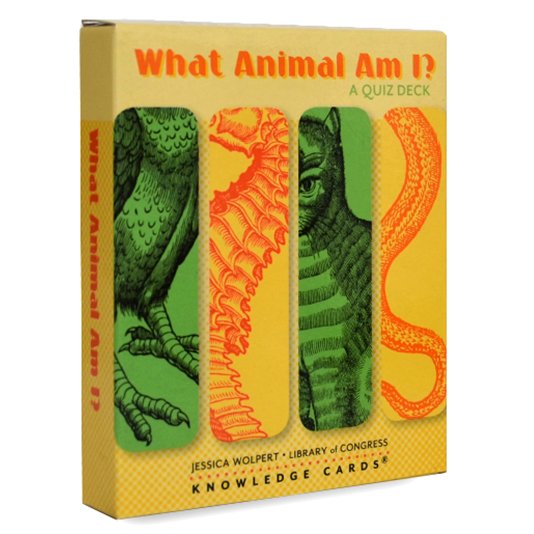
What Animal Am I? - 48 riddles about animals from around the world
Some card decks offer insight, some offer meditation, some offer prediction. And then there are decks that simply ask you to guess. What Animal Am I? by Jessica Wolpert is one of those: 48 cards with clues on the front and answers on the back.
The riddles cover everything that lives, from spiky creatures and slow crawlers to deadly predators and mysterious deep-sea dwellers. Each card gives you hints and waits for you to flip it over.
How it works
The front of each card lists clues. You read them, make a guess, and turn the card over. There you find not only the name of the animal, but also what makes it special: what it eats, where it lives, how it behaves.
The format is compact (76 x 102 mm), and the cards come in a sturdy box. You can take them in the car, use them in the classroom, or simply lay them out at home.
Who this works for
This deck is made for families, schools and anyone curious about animals. The language is clear and the sentences are short. No complicated terminology, just direct information.
You do not need to be a biologist to enjoy this. The riddles are challenging enough not to be obvious, but the clues guide you along.
Put a card on the dinner table and let everyone guess together. The hints build from vague to specific, so you can stop halfway and try to work it out yourself first.
About Jessica Wolpert
Jessica Wolpert writes and edits educational books. Her work focuses on making knowledge accessible, especially for younger readers. This quiz deck fits that line: science without fuss.
Specifications
- Number of cards: 48
- Card size: 76 x 102 mm
- Language: English
- Publisher: Pomegranate Communications
- Includes: Sturdy storage box
- Subject: Biology, animal kingdom
Questions we often get
Is this only for children?
No. The cards are for anyone who enjoys learning about animals. The tone is accessible, but the information is not oversimplified.
Can you play this if you are not fluent in English?
You need basic English to read the clues. The sentences are short and the words straightforward, so it also works well as language practice.