Da Vinci Tarot - Renaissance imagery with classical tarot structure
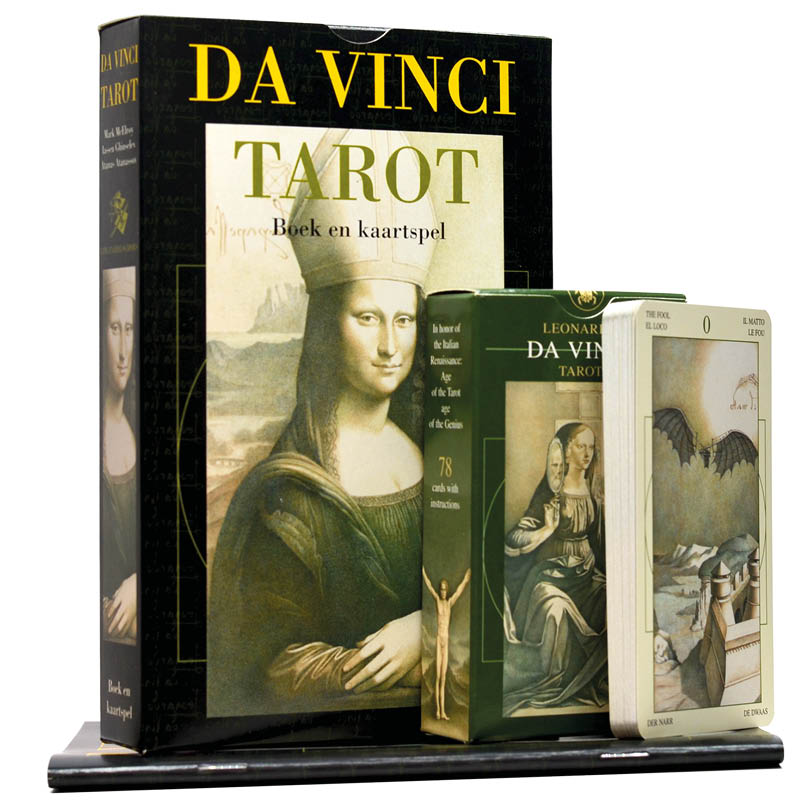
Leonardo da Vinci painted little. He drew much. His anatomical studies, figure sketches, enigmatic portraits and technical designs form the source for this deck. Not literal copies, but reinterpretations of tarot archetypes through the lens of his work.
The Major Arcana was painted in 1992 by Bulgarian artist Iassen Ghiuselev. Ten years later, Atanas Atanassov completed the deck with the Minor Arcana, in exactly the same style. The result is a consistent whole that pairs Renaissance aesthetics with classical tarot structure.
What you see on the cards
The imagery is precise and anatomical. Classical proportions, soft sfumato transitions, facial expressions that conceal something. The figures look away, point, hold objects with hands Da Vinci himself could have drawn.
Colours are muted: earth tones, deep blue, ochre, occasionally a bright red or gold accent. Backgrounds remain calm so the figures stand forward. Every detail is deliberately placed.
The cards follow the Rider-Waite structure but translate it into Renaissance visual language. The Fool wears a Renaissance costume, the Magician works with instruments from Da Vinci's time, the Tower resembles one of his architectural sketches. Familiar to anyone who knows tarot, surprising through the artistic angle.
How this deck behaves
This is not a starter deck. The images are layered and ask for more than a quick glance. Those used to clear, direct symbolism will need to adjust to subtlety here. Gestures are small, gazes ambiguous, the atmosphere meditative.
The deck works well for those who recognize Renaissance art and feel something for it. The references to Da Vinci's work add extra layers to the cards. Those who recognize that draw energy from it. Those who do not miss part of the intention.
Notice the direction figures look and what their hands do. Da Vinci used those details to indicate energy and movement.
About Iassen Ghiuselev and Atanas Atanassov
Iassen Ghiuselev is a Bulgarian artist who painted the Major Arcana in 1992. His work combines Renaissance techniques with modern colouring.
Atanas Atanassov completed the deck ten years later with the Minor Arcana. He followed exactly the same style, making the whole appear as one hand.
Specifications
- Number of cards: 78 (22 Major Arcana, 56 Minor Arcana)
- Card size: 65 x 120 mm
- Cardstock: sturdy, durable
- Finish: matte coating
- Language: multilingual (English, German, French, Italian, Spanish)
- Publisher: Lo Scarabeo
- Artists: Iassen Ghiuselev (Major Arcana), Atanas Atanassov (Minor Arcana)
Questions we often get
Are these reproductions of Da Vinci's paintings?
No. The cards are inspired by his style, sketches and anatomical studies, but are not literal copies of existing works. The artists translated tarot archetypes into Renaissance visual language.
Is this deck suitable for beginners?
It follows the classical tarot structure, so technically yes. The imagery is subtle and layered, which requires more attention than a clear, modern deck. Those just starting out might grow into this better than start with it.