Fantastical Creatures Tarot - mythical beings as tarot guides
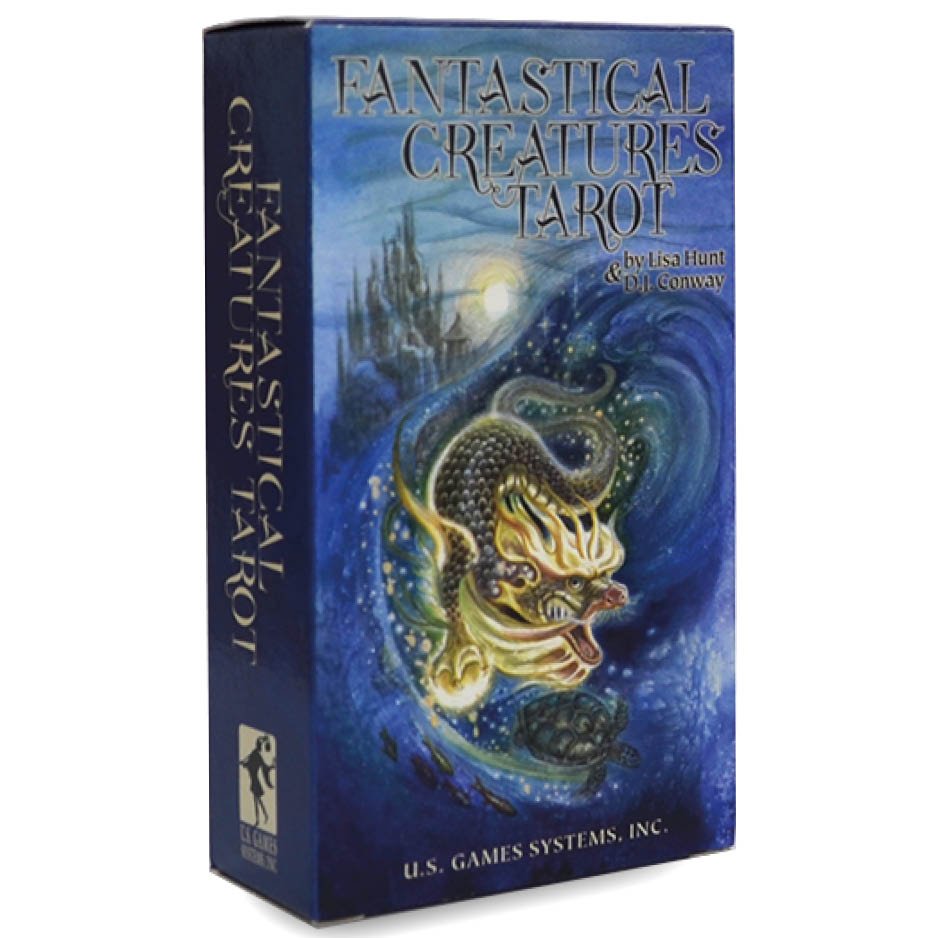
Not every tarot deck asks you to stay within the Rider-Waite tradition. This one does not leave that structure, but populates it with figures from myth and folklore: dragons on the Wands, mermaids on the Cups, elves on the Swords.
Lisa Hunt painted all 78 cards in watercolour. The style is soft, almost dreamlike, with close attention to facial expressions and natural environments. D.J. Conway wrote the texts and chose which beings from which culture appear on which card.
What you see on the cards
The watercolour technique creates smooth transitions between colours. No hard lines, no sharp contrasts. The beings often stand at the centre of the image, surrounded by details from their own stories: a dragon with treasure, a fairy among flowers, a centaur with bow.
Each being comes from a specific mythology. One card may show a Celtic figure, the next a being from Greek or Scandinavian tradition. That mix makes the deck culturally broad, but also asks you to accept that not everything comes from one single story.
The symbolism follows the traditional tarot structure. If you know the Rider-Waite meanings, you will recognise the themes. The difference lies in the execution: where you would normally see a human figure, there is now a mythical being embodying the same lesson.
How the deck works in practice
The 72-page guidebook describes for each card which being you see, which culture it comes from, and what the tarot meaning is. Short and clear, no long narratives. There is also a loose reference card with all the cards and their keywords on a single sheet.
The format is compact: 70 x 120 mm. The cards have rounded corners and a matte finish, which shuffles more comfortably than gloss. The cardstock is sturdy enough for regular use.
Place the reference card beside you during a reading. That way you do not need to keep reaching for the guidebook and you stay in the rhythm of the session.
Who this deck is designed for
The publisher calls this deck suitable for beginners. That is true in the sense that the cards show clear images and the guidebook gives basic meanings. But the mythological layer adds complexity: you need to be able to shift between the being and the tarot meaning.
Anyone drawn to folklore, fantasy literature or mythical stories will recognise the beings more quickly and interpret the images more directly. Without that interest, you have to work harder to move past the layer of the being and reach the tarot message.
About Lisa Hunt and D.J. Conway
Lisa Hunt is an illustrator who has created several tarot and oracle decks, often with nature themes or mythological figures. Her watercolour style is recognisable: soft colours, much detail in faces, lots of green and blue.
D.J. Conway wrote books about magic, mythology and spirituality. She chose which beings appear on which card and wrote the descriptions in the guidebook.
Specifications
- Number of cards: 78
- Card size: 70 x 120 mm
- Finish: Matte with rounded corners
- Cardstock: Sturdy
- Guidebook: 72 pages
- Extra: Loose reference card with all cards and keywords
- Language: English
- Publisher: U.S. Games Systems Inc.
- Artist: Lisa Hunt
- Author: D.J. Conway
Questions we often get
Does this deck follow the traditional tarot structure?
Yes. It has 22 cards in the Major Arcana and 56 in the Minor Arcana, divided across four suits. The meanings align with the Rider-Waite tradition, but are depicted by mythical beings instead of human figures.
Do I need to know the mythologies to work with this deck?
No. The guidebook tells you for each card which being you see and what it means. But if you already know the stories behind the beings, that gives an extra layer to your readings.