Personal Power Oracle Deck Pocket
€ 49,95
€ 75,00
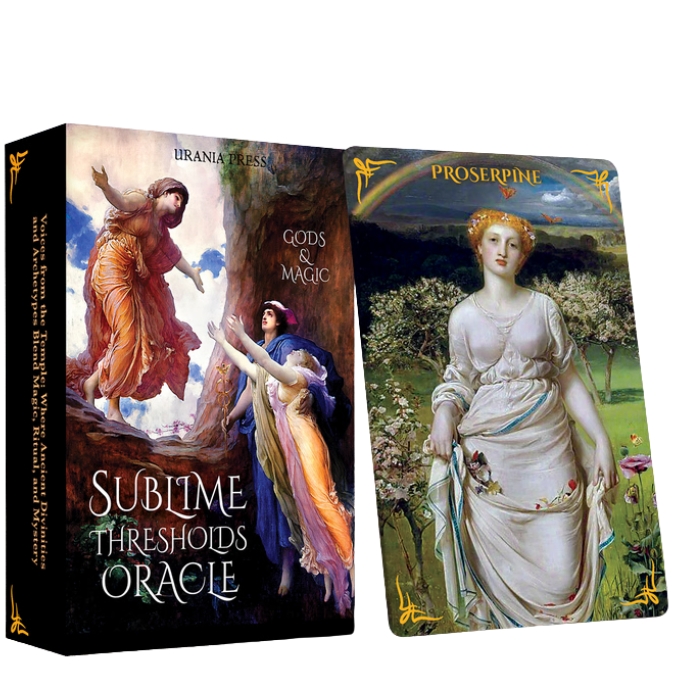
The Sublime Thresholds Oracle gathers 78 cards featuring gods, goddesses and archetypes from ancient cultures. Nitasia Roland selected imagery from over 4,000 historical paintings dating from the 17th to 20th century, digitally restored and enriched with gold foil.
An oracle that translates classical art into contemporary use.
You can build an oracle by creating new images. Or you can do what Nitasia Roland did: review over 4,000 historical paintings and pull out the images that have been telling universal stories for centuries.
Sublime Thresholds Oracle consists of 78 cards. 31 of them show gods and goddesses from Greek, Egyptian and Mesopotamian traditions. The remaining 47 cards focus on themes such as transformation, love and wisdom. All images come from paintings dating from the 17th to 20th century, digitally restored and reproduced with gold foil accents.
The art style varies from card to card, depending on the original painting. You see baroque drama next to romantic atmospheres, classical compositions next to symbolist details. That variation is not a lack of unity but a deliberate choice. Each image was selected because it powerfully represents a particular archetype or emotion.
The gold foil details stand out as soon as you pick up the cards. They emphasize specific elements such as light, halos or key objects in the image. The cardstock is sturdy: 350 GSM with a linen texture that makes the cards matte and quiet.
The guidebook explains all cards, both the deities and the theme cards. For each deity there is a brief description of origin, symbolism and possible meaning in a reading. For the theme cards you get an explanation of the concept and how it can manifest in different contexts.
Sublime comes from the Latin 'sublimis': being lifted toward a threshold. The deck uses that metaphor deliberately. Each card represents a moment when you enter something new, cross a boundary, or undergo a change that shifts your perspective.
This makes the deck not so much therapeutic as reflective. It gives you words and images for experiences that are difficult to name.
You can use the deck for specific questions, drawing one or more cards and looking up the meaning in the guidebook. You can also place a card on your altar to invoke the energy of a particular deity. What the deck does not do is tell you step by step how to act. It offers perspectives, not instructions.
The combination of historical art and mythological knowledge makes the deck suitable for those interested in symbolism or art history who also want to work with oracle cards. It requires no prior knowledge, but the guidebook goes deeper than just keywords.
Draw one card each morning and notice what threshold or new experience may come your way that day. Leave the card where you can see it all day.
Nitasia Roland founded Urania Press in 2020. She is a writer, artist and independent researcher with a focus on esoterica and symbolism. In addition to Sublime Thresholds Oracle, she also created Tarot Chimera and Starlore Astronomical Tarot.
For this deck she reviewed over 4,000 historical paintings, a research process that took several years. Her selection criteria were clear: the image had to powerfully represent an archetype and remain visually convincing after digital restoration.
Do you need prior knowledge of mythology to work with this deck?
No. The guidebook describes each deity with context, symbolism and possible meaning. You learn the stories while working with the cards. It does help if you have an interest in ancient cultures or symbolism.
How does this deck differ from a classical tarot deck?
This is not tarot but an oracle with 78 cards. There is no fixed structure of arcana or elements. Instead you work with 31 deity cards and 47 theme cards, which you can combine freely. The focus is on archetypes and universal experiences, not on a fixed reading system.
| Auteur | Nitasia Roland |
| Uitgeverij | |
| Taal | English |
| SKU | 1993-NT04 |
Since 1999, Tarot.nl has been the trusted source for the largest collection of cards in the Benelux. As a Dutch family business, we personally select every deck based on quality and character.
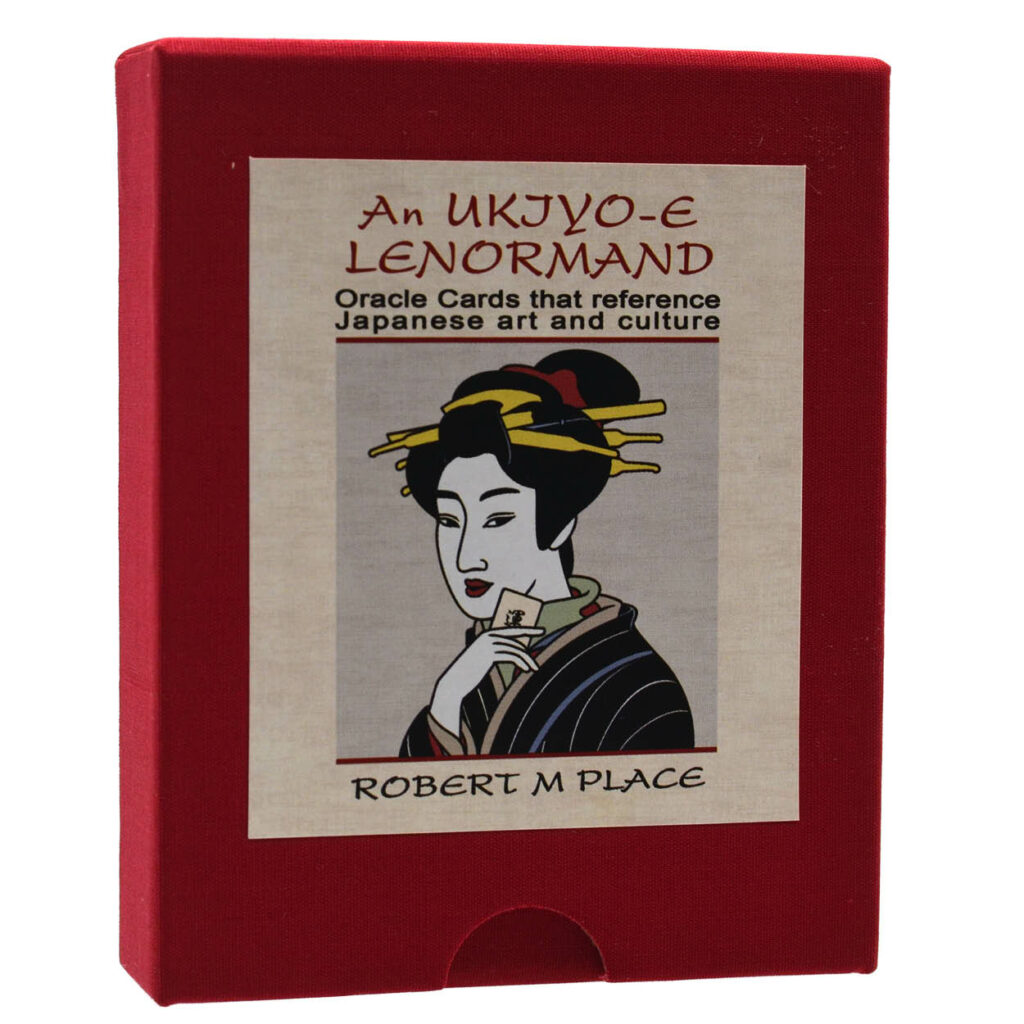
A 36-card Lenormand deck styled after Japanese Ukiyo-e woodblock prints. The gold-edged cards combine classic Lenormand symbols with Eastern imagery and come in a red cloth-covered storage box.
A luxury edition by tarot artist Robert M. Place for collectors and readers who appreciate Japanese print art.
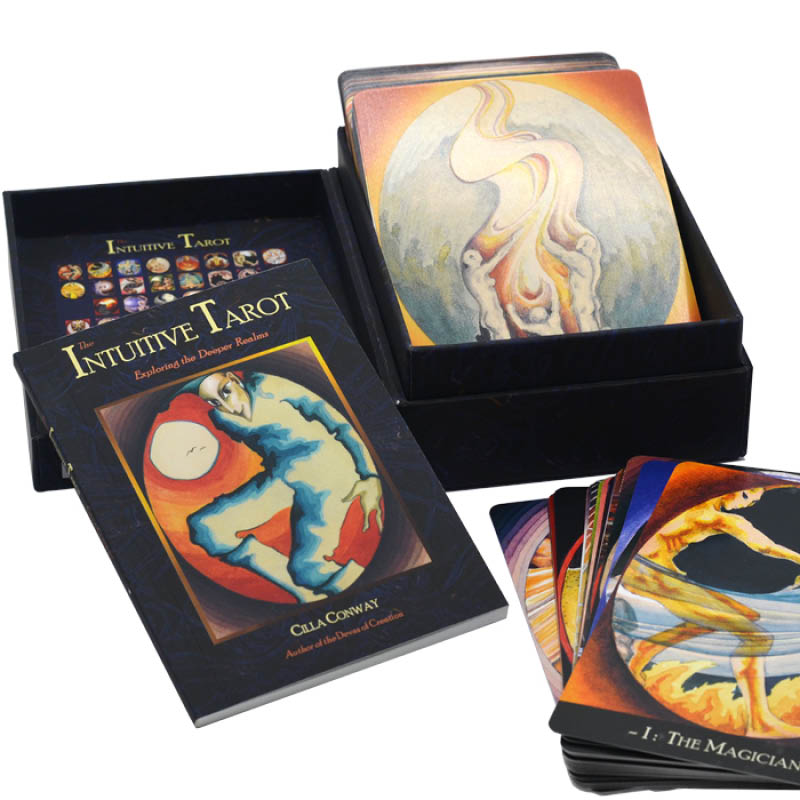
A tarot deck that asks you to let go of what you think you know. Cilla Conway drew 78 borderless cards with vivid imagery that speaks directly to your subconscious. No fixed rules, just your own feeling as guide.
For those who want to read tarot from what a card evokes, not what is fixed about it.

A minimalist tarot deck with gender-neutral illustrations in Japanese kawaii style. The Minor Arcana consists of pip cards, leaving room for intuitive reading. Compact format with matte finish.
A clear deck that brings tarot back to simple shapes and colour.
This site uses tracking technologies. You may opt in or opt out of the use of these technologies.