The Lost Tarot of Nostradamus - medieval manuscript as tarot deck
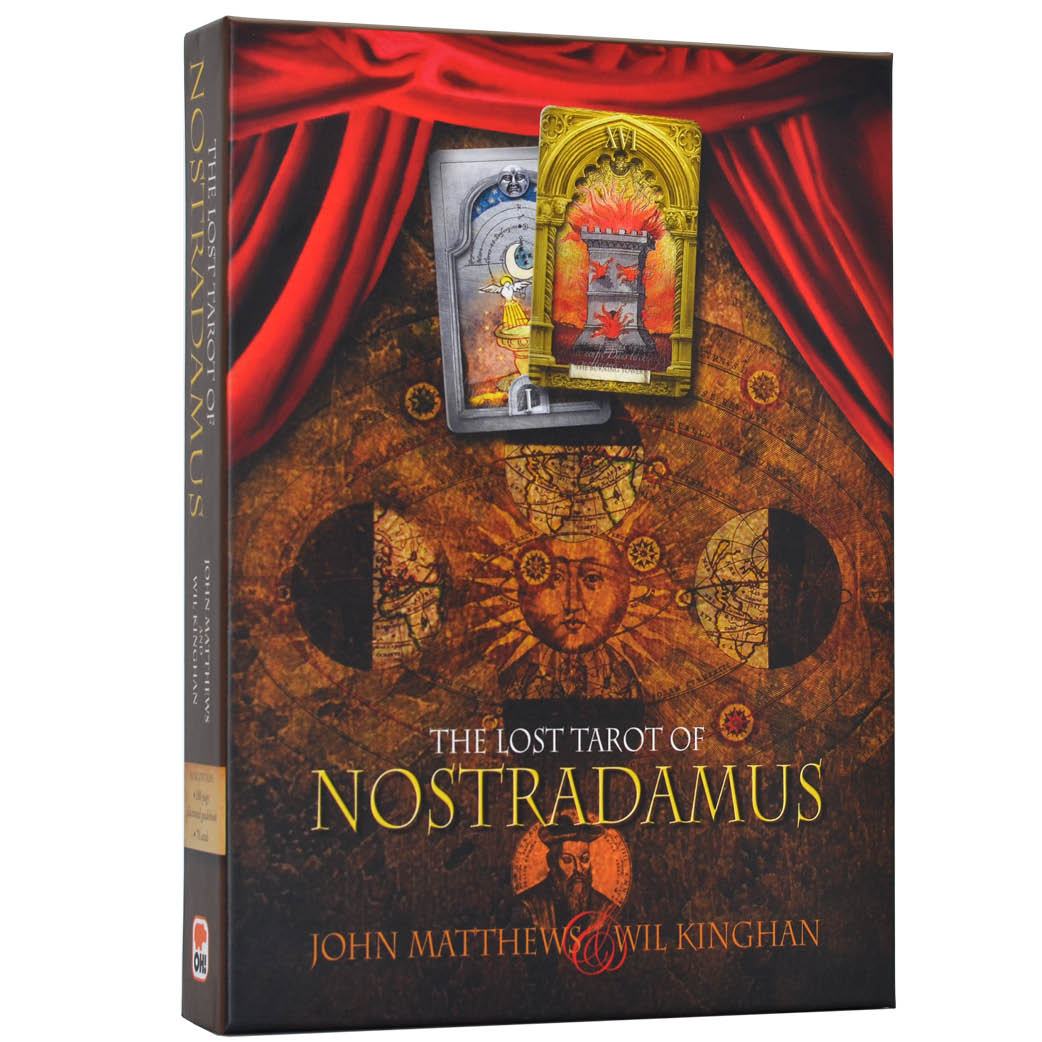
In 1994, a manuscript containing eighty watercolour paintings from the 16th century was discovered in the Biblioteca Nazionale Centrale in Rome. The images were attributed to Michel de Nostredame, better known as Nostradamus. This deck is based on that find.
The paintings have been translated into 78 tarot cards following the classic structure: 22 major arcana and 56 minor arcana. The imagery is medieval, full of allegorical figures, cosmic symbols and Renaissance architecture. Colours are muted, often earthy with accents in red and blue.
What you see on the cards
The illustrations are reproductive. They stay close to the original paintings, including the patina and flat perspectives typical of 16th-century art. Figures wear Renaissance clothing. Architecture plays a large role: towers, temples, gates.
Symbolism is layered and ambiguous. A card can contain multiple levels: astrological signs, alchemical symbols, animals with emblematic meanings. The guidebook links each card to one of Nostradamus's quatrains and offers historical context.
The format is large: 152 x 203 mm. This makes the details clearly visible, but the cards are not suited for small hands or frequent shuffling.
Who this deck works for
This is not a beginner deck. The symbolism assumes knowledge of alchemy, astrology and medieval iconography. The guidebook helps, but does not give fixed meanings. Instead, it describes the historical and prophetic context of each image.
Many people use this deck for study or meditation, not for daily readings. The images ask for time. They open slowly.
Lay out one card and look up the quatrain in the guidebook. Read both side by side and notice where the connection lies. The cards work strongest when you treat them as riddles, not as answers.
About John Matthews and Wil Kinghan
John Matthews is a writer and researcher specialising in Celtic mythology and esoteric traditions. He has written dozens of books on folklore and divination, including the texts for the Wildwood Tarot.
Wil Kinghan is an artist and historian. His work focuses on hermetic traditions and medieval art. For this deck, he adapted the original paintings into tarot cards while respecting the authenticity of the images.
Specifications
- Number of cards: 78
- Card size: 152 x 203 mm
- Language: English
- Weight: 580 g
- Publisher: Tuttle Publishing
- Author: John Matthews
- Artist: Wil Kinghan
- Includes: Illustrated guidebook
Questions we often get
Are the paintings really by Nostradamus?
The manuscript is attributed to him, but this has not been proven with certainty. The paintings do date from the 16th century and the symbolism aligns with the quatrains known under his name.
Does this deck differ from a classic Rider-Waite deck in structure?
The structure is the same: 22 major arcana and 56 minor arcana divided into four suits. However, the names and images differ greatly. This deck follows the prophetic visions from the manuscript, not the RWS tradition.