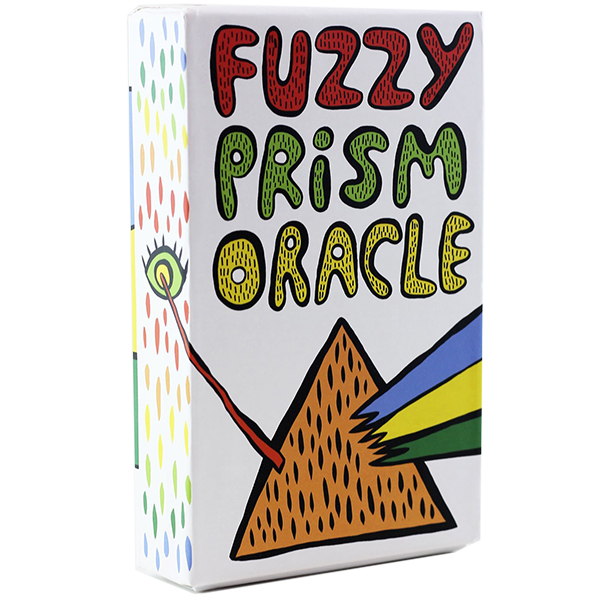
Fuzzy Prism Oracle
€ 33,50

€ 38,95 € 35,05
Kim Krans presents 78 archetypes through her signature linework and watercolour accents. The round shape of the cards reflects the cyclical nature of the psyche. The accompanying handwritten book of 224 pages connects each archetype to everyday life.
A deck that focuses on universal patterns rather than classical tarot structure.
Only 3 left in stock
Most tarot decks follow the structure of Major and Minor Arcana. This deck takes a different path. The Wild Unknown Archetypes by Kim Krans focuses on archetypes: the universal patterns and roles that recur across all cultures and times in stories, dreams and the human psyche.
The deck consists of 78 round cards, divided into four categories: The Selves, The Places, The Tools and The Initiations. Each archetype is rendered in Krans' recognisable style of fine linework with watercolour accents. The colours are vibrant but not intrusive, the symbolism clear enough to evoke something immediately without becoming too explicit.
All cards in this deck are round, with a diameter of 115 millimetres. This is not a decorative choice. A round card has no top or bottom, so no reversed meaning.
In practice this means each card always retains its full meaning. You do not interpret based on the direction the card falls, but on the context of your spread and your own associations. This makes the work more direct, especially if you are used to intuitive reading.
The circular form also reinforces the feeling of cycle and continuity. Archetypes are not static concepts, but patterns that return again and again in different guises.
Round cards shuffle differently from rectangular ones. They slide more smoothly, but you need slightly more space to lay them out. Keep this in mind if you are used to working on a small surface.
The accompanying guidebook runs to 224 pages and is entirely handwritten and illustrated by Kim Krans herself. Each archetype receives its own description that addresses the psychological and symbolic layer.
The texts are not short. Krans takes the space to give context, draw connections to myths and stories, and describe how an archetype can manifest in your life. Each card also includes reflection questions, designed to activate your own experience of the archetype.
The guidebook contains no fixed spreads. This fits the design: this is not an instruction deck, but a tool for reflection. You decide how to use the cards.
This deck is designed for anyone interested in psychology, self-reflection and symbolism. The language in the guidebook is clear, but the concepts do require you to be open to introspection. Beginners can work with it, provided they are willing to take time with the texts.
If you are looking for quick answers or fixed meanings, this is not your deck. The strength lies precisely in the space it leaves for personal interpretation. This makes it suitable for therapeutic work, journaling and meditation.
Kim Krans is an artist, author and creator of The Wild Unknown series. Her work combines visual art with spiritual concepts, drawing on Jungian psychology, mythology and her own experience with self-study.
Krans' style is immediately recognisable: fine black lines, organic forms, watercolour layers that add colour and emotion without dominating the composition. Her work has had a strong influence on the contemporary tarot and oracle world.
Can I use this deck if I have no experience with tarot?
Yes. This is not a tarot deck in the classical sense, so you do not need to know the traditional meanings. The guidebook gives sufficient context for each archetype. It is helpful if you are used to symbolic thinking.
How does this deck differ from The Wild Unknown Tarot?
The Wild Unknown Tarot follows the Rider-Waite structure with 78 cards divided into Major and Minor Arcana. The Wild Unknown Archetypes has no tarot structure, but works with four categories of archetypes. The visual language is similar, but the approach is fundamentally different.
| Auteur | Kim Krans |
| Taal | English |
| Uitgeverij | |
| ISBN | 9780062871770 |
| SKU | 0125-930 |
Since 1999, Tarot.nl has been the trusted source for the largest collection of cards in the Benelux. As a Dutch family business, we personally select every deck based on quality and character.
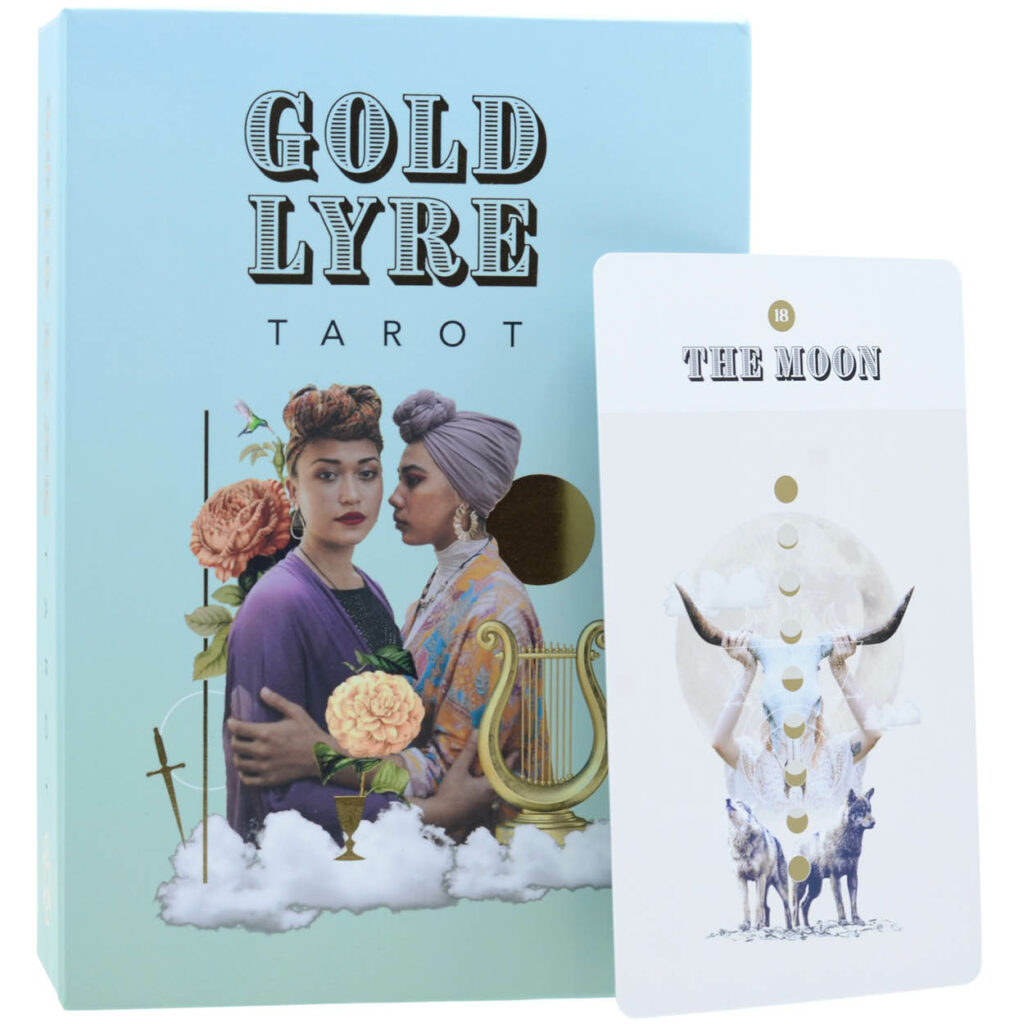
A modern tarot deck built on the classic Rider-Waite-Smith structure, using photo collages instead of traditional symbolism. The cards focus on diversity, gender fluidity and an earthly form of spirituality.
A calm, accessible deck for those who value minimalism and inclusivity.
This site uses tracking technologies. You may opt in or opt out of the use of these technologies.