Ukiyo Tarot - Japanese woodblock print style in a Rider-Waite-Smith structure
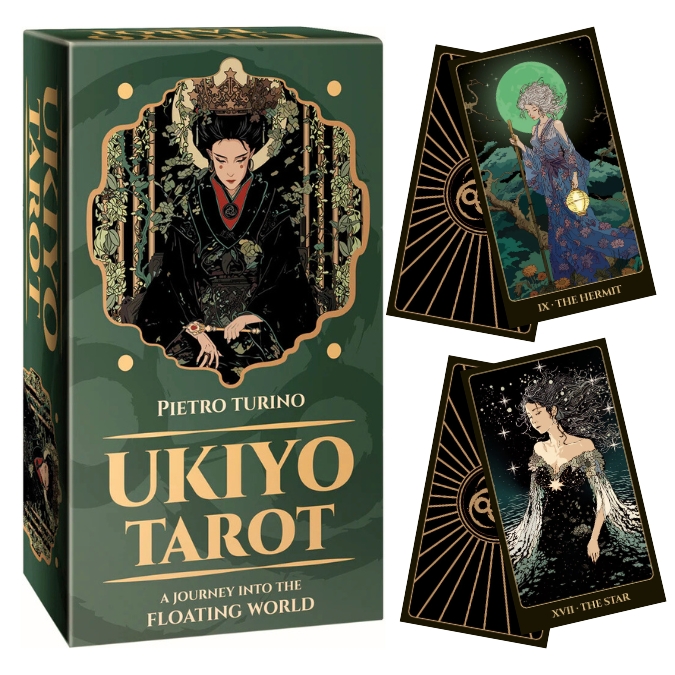
Ukiyo literally means 'floating world'. It is a 17th-century Japanese concept centred on finding beauty in what is fleeting. Pietro Turino takes that idea into a tarot deck with a familiar structure and a visual language that feels like a haiku: still, poetic, with an eye for detail.
The deck follows the Rider-Waite-Smith tradition completely. The Major Arcana run from the Fool to the World, the Minor Arcana are divided into wands, cups, swords and pentacles. What is different is how Turino tells the stories.
What you see on the cards
The style refers to ukiyo-e, the Japanese woodblock prints that were popular in the 17th and 18th centuries. Clean lines, flat colours, natural elements. At the same time you see the influence of contemporary manga and anime: the characters have large eyes, expressive faces and streamlined shapes.
Backgrounds play a leading role. Seasons alternate, landscapes shift from blossom to snow. Nature is not a backdrop but a narrator. A card with rain showers tells a different story from the same card with cherry blossom.
The mood is melancholic without becoming heavy. You see contemplation, reflection, a moment of rest. That makes the deck suitable for readings in which you do not chase answers but give space to what is already there.
How it relates to other decks
This is not a literal translation of Rider-Waite-Smith into Japanese style. Turino retranslates the symbols. What in a traditional RWS deck is a medieval tower becomes a Japanese temple gate here. The Court cards wear kimonos and hakamas, but their roles remain recognisable.
The 128-page guidebook is multilingual and contains card meanings for each card. The texts are practical and offer starting points for interpretation. No philosophical essays, but workable descriptions.
When laying cards, pay particular attention to the natural elements in the backgrounds. Seasons and landscapes often give more information about timing and mood than the figures themselves.
Who this deck works for
Because of the Rider-Waite-Smith structure, this deck is accessible to beginners. The meanings are recognisable, the guidebook clear. At the same time the imagery offers enough depth for readers who have been working with tarot for longer.
If you have an interest in Japanese culture or aesthetics, this deck feels like a logical choice. Turino uses the visual language not as decoration but as a language in itself.
About Pietro Turino
Pietro Turino is an Italian artist and graphic designer with a background in anthropology. He studied the Japanese language and culture, and that shows in the way he translates symbols. No superficial quotations, but a considered rewriting of archetypes into a different visual tradition.
His work is characterised by clean lines, clear composition and a fascination with the relationship between technology and tradition.
Specifications
- Number of cards: 78
- Publisher: Lo Scarabeo
- Language cards: English
- Guidebook: 128 pages, multilingual
- Card size: 65 × 118 mm
- Structure: Rider-Waite-Smith
- Artist: Pietro Turino
- Publication date: September 2025
Questions we often get
Is this deck suitable if you have never worked with tarot before?
Yes. The structure is Rider-Waite-Smith, so you can look up the basic meanings in any standard tarot book. The guidebook gives an explanation for each card, which makes getting started easier.
How does the art style relate to traditional ukiyo-e?
Turino refers to the woodblock print style from the 17th and 18th centuries, but adds a contemporary manga influence to it. The result is more contemporary than classic ukiyo-e, but clearly inspired by its aesthetics.