Yule – the quiet beginning of a new year
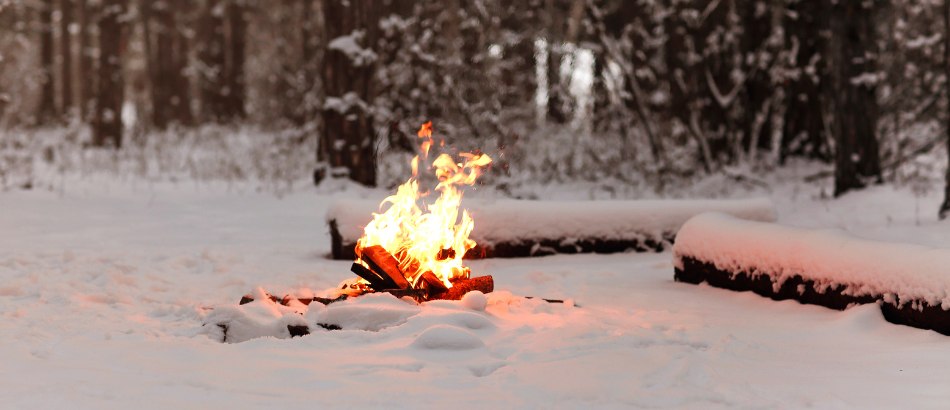
Yule marks the darkest point of the year. The days are short, the pace is slow, and the world seems to draw inward. Right there, where little is visible and nothing needs to be proven, the beginning of something new can appear. Not loudly, not dramatically, but quietly and with care.
In a 1 year such as 2026, Yule carries extra meaning. Beginning does not ask for shape, a decision, or action yet. It asks for attention. Attention to what is present before it has words. Yule reminds us that every new beginning is allowed to exist first as a feeling, a thought, or a gentle inner movement.
Where does Yule come from?
The name Yule comes from Northern Europe and was already used by Germanic and Scandinavian peoples long before there was a fixed calendar year as we know it today. In older sources the word appears as Jul, Jól, or Geol. It did not refer to a single day, but to a period around the winter solstice.
For these cultures, Yule was not an abstract idea, but a lived transition. Winter was not symbolic, but physical reality. Dark, cold, and unpredictable. That is why the moment when light slowly began to return was experienced as an essential turning point.
Yule literally meant: the wheel turns. Not suddenly, but inevitably. Life moves on, even when the outer world looks still.
The original practice
Originally, Yule was about gathering, resting, and making it through. People came together around fire, shared food and stories, and marked the transition from darkness back toward light. The well known custom of the Yule log, a large piece of wood burned for days, symbolized warmth, protection, and continuity.
That fire was not festive decoration, but an anchor. It reminded people that light does not disappear, even when it is barely visible. In many traditions, the ashes of the Yule fire were kept to bring protection or blessing later. This shows how strongly this moment was seen as a true beginning, even though the world still seemed deep in winter.
In that sense, Yule was not a modern New Year celebration, but a transition ritual. A moment to pause with what had passed, while the new still did not need to begin.
The Yule period, the Twelve Days of Christmas, and the Rauhnächte
Yule falls around the winter solstice, most often on December 21 or 22. In many older traditions, Yule was not seen as one day, but as a period of about twelve days, roughly from December 20 to January 1. This period is also known as the Twelve Days of Christmas.
In Northern and Central European traditions, these days are also known as the Rauhnächte, often translated as the smoke nights. The name refers to the use of smoke and herbs to cleanse homes and stables, but also to the idea that these nights fall outside ordinary time. They were seen as days between time, when the old year was already closed, while the new had not fully begun.
This special status connects to an older sense of timekeeping. A solar year is about 365 days, while a lunar year is about 354 days. This difference of about 11 days was not ignored in many cultures, but consciously marked. The twelve nights of Yule were seen as these extra, or missing, days. A transition period in which rules, rhythm, and expectations temporarily loosened.
In some traditions, counting these twelve nights begins on Christmas Eve and continues until Epiphany on January 6. Each night was sometimes symbolically linked to a month of the coming year. Not to make predictions, but to pay attention to patterns, dreams, and impressions.
In a 1 year such as 2026, this period fits naturally with the feeling of a new beginning that does not yet need a clear shape. The turn of the year happens in the middle of this time, so the new year is born from silence and attention, not from haste.
Evergreens, fire, and protection
The trees and plants associated with the Yule season have carried meaning for centuries. Spruce and pine, with their evergreen needles and familiar scent, were seen as signs of continuity. In the darkest time of year they remind us that life continues. Their resinous fragrance offered a sense of safety and recovery, as if nature itself provided protection when everything else seemed to pause.
Holly and mistletoe also held a steady place in this season. They were linked to vitality, long life, and abundance. Hanging wreaths of evergreen branches was not decoration in the modern sense, but a symbolic act. It marked the threshold between old and new, with the intention of keeping what felt heavy or restless outside, while filling the home with living strength.
Fire and wood as a transition ritual
Fire played a central role during Yule. Burning wood, often together with holly, mistletoe, or pine cones, symbolized letting go of what would not be carried into the new year. Not from rejection, but from completion. Fire warmed, illuminated, and marked the moment when the sun was gently welcomed back.
Later, herbs were added as well, such as sage, mugwort, or cinnamon. Not only for their scent, but because they were associated with cleansing and clarity. Even now, many people intuitively recognize how fragrance and fire together can create calm. It is a sensory way of feeling a transition without needing to explain it.
From Yule to Christmas: rituals that remained
As Christianity spread, many Yule traditions were carried into new forms. Not by banning them, but by weaving them into a different story. This made the transition more understandable and easier to accept for many people.
That is why so many elements of Yule are still recognizable in Christmas and the year change today. The Christmas tree, evergreen wreaths, candlelight, shared meals, fire bowls, and even fireworks at New Year are echoes of older transition rituals. The birth of Jesus connects with the same theme: rebirth, renewal, and hope, right when light slowly returns.
In a 1 year such as 2026, these symbols can feel fresh again. They remind us that renewal does not come out of nowhere, but grows from care, attention, and consciously closing what has been.
Deeper context
In numerology, Yule fits the zero point before the 1. The moment before movement. In 2026, a 1 year, this feels especially fitting. Everything that takes shape later in the year has its origin here.
Astrologically, the sun is in Capricorn during Yule. This sign is about structure, responsibility, and long term thinking. Capricorn does not ask for speed, but for reliability. It reminds us that what begins slowly often grows deeper roots.
In tarot, Yule aligns with The Fool and The Magician. The Fool stands at the start of the journey without a map or plan. The Magician follows once awareness arises of what is already available. Together, these cards show that a beginning does not come from control, but from trust and presence.
Practical application in 2026
In a 1 year like 2026, Yule invites you not to lock the new into plans too quickly. It can be tempting to define direction, set goals, and create schedules. Yule asks something else.
What wants to be acknowledged without being fully worked out yet? Maybe it is a different way of living, working, or choosing. Maybe it is simply a desire for more rest, space, or honesty.
By taking that desire seriously, direction can appear without pressure. Not everything needs to be visible at once. Some things need time to ripen.
Reflection and ritual
Create space for this moment on purpose. Not as a required ritual, but as a gentle pause.
Sit somewhere quiet. If you like, light a candle, not to force anything, but to mark the moment. Ask yourself this question:
What is allowed to grow in me, without me having to carry it yet?
Write down one sentence that answers this. Keep it simple. No explanation, no plan. Then place that sentence away, for example in a book or an envelope. This way you honor the beginning without fixing it.
This ritual echoes the original Yule practice: marking something, keeping it, and opening it again later.
Yule reminds us that every new beginning has a quiet phase. That doing nothing can sometimes be exactly what is needed. In a 1 year such as 2026, this is not a delay, but preparation.
What emerges in silence often carries more direction than what is shaped under pressure. Yule shows that beginning does not start with action, but with attention. And that is more than enough.
FAQ about Yule
What is Yule?
Yule is an old seasonal festival around the winter solstice that marks the return of light. It stands for transition, stillness, and the start of a new year.
When does Yule take place?
Yule usually falls on December 21 or 22, around the winter solstice. In many traditions, the Yule period runs roughly from December 20 to January 1.
Why is Yule seen as a period rather than a single day?
Older traditions experienced Yule as a transition time of about twelve days, often called the Twelve Days of Christmas. These days were seen as a time outside the usual rhythm.
What are the Rauhnächte?
The Rauhnächte, or smoke nights, are the twelve nights around Yule. They were seen as days between time, used for slowing down, reflection, and cleansing with smoke and herbs.
Why are fire and evergreens important during Yule?
Fire symbolizes warmth, protection, and welcoming the returning light. Evergreens such as spruce and pine represent continuity and life force in the darkest time of the year.
How is Yule connected to Christmas and New Year?
Many Yule rituals live on in later Christmas traditions, such as the Christmas tree, evergreen wreaths, candlelight, and gathering with family. New Year falls within the Yule period and naturally marks a transition.
What does Yule mean in a 1 year such as 2026?
In a 1 year, Yule emphasizes that a new beginning first asks for space and attention. It invites you to slow down and sense what wants to emerge, without locking it into plans right away.