The Tarot of Secrets - alchemy in classical tarot structure
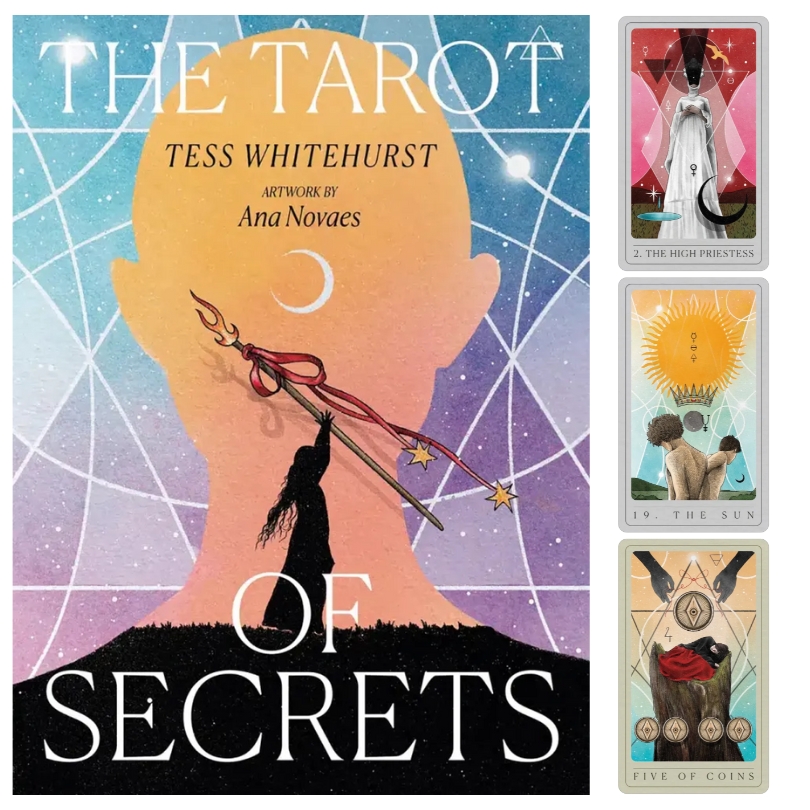
Some tarot cards tell their story loud and clear. These whisper. The Tarot of Secrets follows the classical structure of 78 cards, but illustrator Ana Novaes has immersed them in a palette of browns, greens and dark blues that sits somewhere between melancholy and contemplation.
The 352-page guidebook, written by Tess Whitehurst, uses alchemy as a framework. Not as a mystical concept, but as a method: what feels heavy in your life can, through conscious attention, be transformed into something lighter. The text explains what the alchemical and astrological connections mean for each card, without losing you in jargon.
What you see on the cards
Ana Novaes works with ink, watercolour and gouache. This gives the cards a hand-painted character with soft transitions and deep shadows. The colours are more muted than most modern tarot cards. Plenty of earth tones, few primary colours.
The basic structure is recognizable to anyone who knows the Rider-Waite-Smith. The High Priestess still sits between two pillars, the Magician still has his tools before him. But Novaes places the figures in images that reference ancestral stories and feminine archetypes. The atmosphere is contemplative rather than instructional.
This is a deck that invites you to linger with a card. Not to quickly grab an answer, but to notice which detail keeps drawing your attention.
How the guidebook works
Tess Whitehurst writes clearly. Her texts go deeper than isolated meanings: she explains why a card carries certain symbols and what the background is. For each card you get alchemical and astrological connections, but also practical suggestions for how to read the card in a spread.
The creators recommend looking at the card first before opening the guidebook. Which element attracts you? What feels uncomfortable? Only then do you read what the text says. This approach works well if you want to learn to read tarot by feeling, not just by knowledge.
Try the 'Secret and Key' spread: three cards for 'the secret I now see', 'what I am transforming' and 'the key I take with me'. Pay most attention to the card that brings up resistance.
Who this deck works for
This deck is suitable for those who want to go beyond keywords. The extensive guidebook makes it accessible to beginners willing to take the time, but the depth and contemplative imagery especially appeal to people who already have some experience with tarot.
The dark, melancholic atmosphere is not decoration. It is a choice that affects how you work with the cards. If you prefer clear, directly readable images, this deck requires more patience than you might expect.
About Tess Whitehurst and Ana Novaes
Tess Whitehurst wrote 'Magical Housekeeping' and 'The Good Energy Book', among others. Her work appeared in major publications and she has been featured on Fox and NBC. She teaches through the Wisdom Circle Online School of Magical Arts, her own online school.
Ana Novaes, also known as Ltg.Art, is a Brazilian illustrator. She has worked with Disney and HarperCollins and focuses in her own work on ancestral stories and feminine archetypes.
Specifications
- Number of cards: 78
- Language: English
- Author: Tess Whitehurst
- Illustrator: Ana Novaes
- Publisher: Blue Angel
- ISBN: 9781922574459
- Weight: 920 g
- Dimensions: 125 x 170 x 64 mm
- Guidebook: 352 pages, full colour
- Box: Hardcover with inner tray and ribbon
Questions we often get
Is the guidebook usable if you have little experience with tarot?
Yes. The guidebook contains 352 pages and explains not only the meaning of each card, but also why that meaning exists. You read about alchemical and astrological connections in clear language. This makes it a good learning tool, provided you take the time to read the text. The cards themselves follow the classical structure, so any prior knowledge fits well.
How does Ana Novaes' illustration style differ from a standard Rider-Waite-Smith deck?
The basic structure and symbolism are recognizable. The main difference lies in the atmosphere: Novaes uses muted colours and a hand-painted technique with ink, watercolour and gouache. The images are darker and more melancholic. The emphasis is on feeling and atmosphere, not on clear informational pictures. This requires more patience, but it also makes the cards suitable for long contemplation.