Odyssey Oracle Cards - the Odyssey translated into tarot
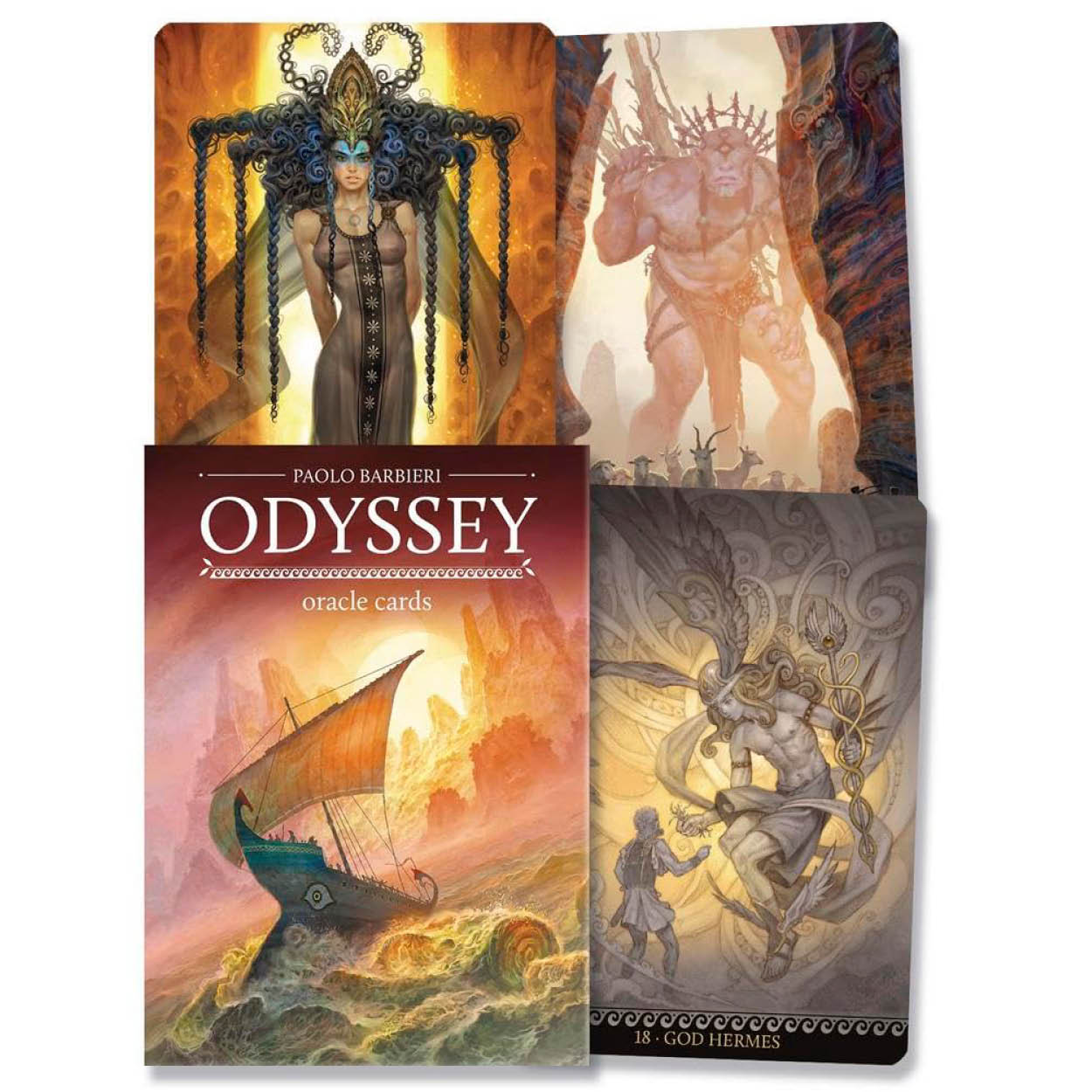
This deck does something you do not see often: it takes the narrative structure of a Greek epic and applies it to the Rider-Waite-Smith. Each card receives a name and a scene from the Odyssey, but remains true to the meaning of the original tarot system.
Charles B. Harrington wrote the texts. Paolo Barbieri drew the images. The result is a deck where you meet Odysseus, Circe, the Cyclops and the Sirens instead of the familiar medieval figures you see in a classic RWS deck.
What you see on the cards
The illustrations are fantasy-driven, with drama and colour throughout. Barbieri draws muscular, theatrical figures with clear facial expressions. No subtle watercolours, but scenes that immediately place you in a specific atmosphere.
The cards follow the full 78-card structure: 22 Major Arcana and 56 Minor Arcana. Each of the Major Arcana is linked to a well-known story from the Odyssey. The Minor Arcana receive the same treatment, though with less famous episodes.
The guidebook runs to 128 pages and covers each card separately. You get both the mythological context and the tarot meaning, with an explanation of how the two come together. This helps especially if you do not know all the stories by heart.
How this deck relates to a classic RWS
The structure is the same. The symbolism has been relocated. Where you have The Magician in a Rider-Waite with his table full of attributes, here you see a figure from the Odyssey embodying the same force. This makes the deck usable for those already working with RWS who want something different without having to relearn everything.
At the same time, the mythological layer adds something. If you draw The Lovers and see a scene with Circe, that evokes different associations than a medieval man between two women. That extra layer can enrich a reading, provided you are open to stories.
Draw a card and read the myth in the guidebook first, before looking at the tarot meaning. Sometimes the story says more than the fixed interpretation.
Who this works for
This deck is designed for those who already know how tarot works. The guidebook explains the stories, but assumes you know the basic meanings of the Rider-Waite. Beginners can work with it, but will need more time to grasp the double layer.
If you love mythology, or if you are looking for a deck that is visually more emphatic than a classic RWS, this is a logical choice. The visual language is pronounced and leaves little room for doubt about what is happening in a scene.
About Paolo Barbieri and Charles B. Harrington
Paolo Barbieri is an Italian illustrator who has been creating fantasy art for decades. His work is recognizable by its dynamic compositions and emphasis on expression. He has illustrated several decks for Lo Scarabeo.
Charles B. Harrington writes about tarot and symbolism. For this deck he translated the episodes from the Odyssey into tarot context, and wrote the accompanying texts that appear in the guidebook.
Specifications
- Number of cards: 78
- Guidebook: 128 pages
- Language: English
- Publisher: Lo Scarabeo (Llewellyn Publications)
- Box size: approx. 102 × 137 × 32 mm
- Illustrator: Paolo Barbieri
- Author: Charles B. Harrington
- Structure: full 78-card tarot based on Rider-Waite-Smith
Questions we often get
Do I need to know the Odyssey to use this deck?
No. The guidebook provides the context from the story for each card. You can learn the mythology while using the deck.
How does this deck differ from a standard Rider-Waite?
The structure and meanings are the same. The difference lies in the visual language: instead of medieval symbolism you see scenes from Greek antiquity. The cards are visually much more dramatic.